|
What Americans Get Wrong About Buying a BMW in Germany
How to buy a BMW in Germany
You can spot the American at a Munich dealership within thirty seconds. He is looking for a 330i with leather, navigation, and the M Sport package — same way he would shop in Cincinnati. None of that translates the way he expects. The BMW he can buy here is a different car under different rules than the one BMW sells him at home, and the costs that pile up after the keys change hands look nothing like a US lease quote.
I have spent years building reference data for the German automotive market. The same gaps keep coming up in conversations with American buyers and expats. Here are the ones worth closing before you sign anything.
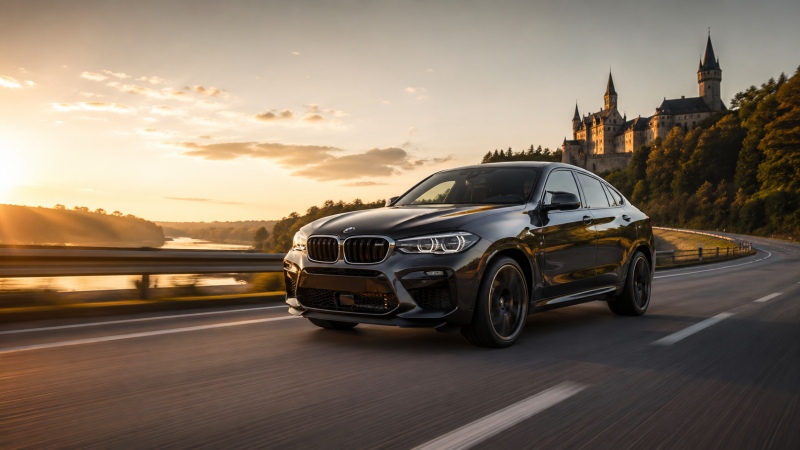
Many americans want buy a BMW from Germany -
pictures: BMW
The TÜV is not a smog check
Americans who hear "vehicle inspection" picture a quick OBD-II plug-in and an emissions sticker. Germany's
Hauptuntersuchung — the HU, run by TÜV, DEKRA, GTÜ, KÜS or TÜV Nord — is a real inspection. New passenger cars get their first one at 36 months, then every two years after that. The combined HU and AU runs roughly €143 to €170 in 2026, depending on the
Bundesland and provider. Central TÜV stations sit on the high end.
Überwachungsorganisationen like DEKRA in workshop partnerships are typically €15 to €25 cheaper for the same legally identical Plakette.
What surprises people is the failure rate. The TÜV Report 2026, covering 9.5 million inspections from July 2024 through June 2025, shows 21.5% of all Pkw fail their first attempt with significant or dangerous defects — the worst result in nine years, per the TÜV-Verband press release of 20 November 2025. Fail with
erhebliche Mängel, and the inspector keeps your Plakette. You fix the issues, you come back for a
Nachuntersuchung within a month. Miss the window and you start over from scratch.
Why your American shopping list looks different here
Three things break the US shopping habit immediately.
Diesel. Germany still sells the 320d, 330d xDrive, M340d xDrive, 520d, 530d, 540d xDrive, 730d, 740d, X3 xDrive20d, X5 xDrive30d, and X7 xDrive40d. The US has not had a BMW diesel since the 2018 328d and 540d. If you arrived from Texas thinking diesel BMWs were extinct, the bmw.de configurator will reset that assumption fast.
Manual transmission. As of late 2025, the six-speed is offered on the M2, the base M3 and M4 (RWD only — no Competition, no xDrive), and the Z4. Z4 production ends April 2026. After that, manual is M-cars only. The M3 manual is expected to wind down by early 2027, per BMWBLOG reporting from 30 November 2025. If a manual matters to you, the window is closing in months, not years.
Trim structure. Germany sells the G20 3 Series in
Sport, M Sport and M Sport Pro. The US gets a single base trim with optional packages. The configurator pages are not equivalent. If you want to cross-check spec sheets, generation codes, and engine variants across markets without dealer noise, the
BMW model at Automobilisto pulls the data straight from manufacturer documents and homologation filings.
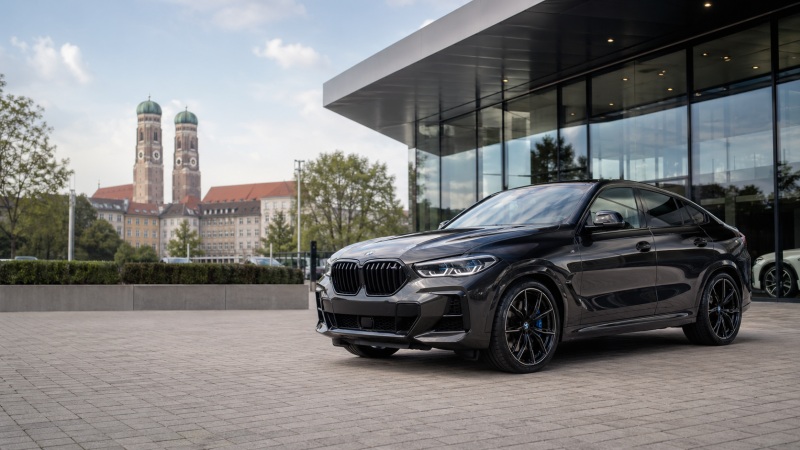
A BMW at the Frauenkirche in Munich
The registration runaround
Registering a car in Germany is a sequence, not an errand. For an expat the order matters more than the paperwork itself. Skip a step and the next office sends you back two squares.
-
Anmeldung at the Bürgeramt — this gets you a Meldebescheinigung. Without it, nothing else works.
-
Open a German bank account. The Hauptzollamt collects Kfz-Steuer by SEPA direct debit.
-
Get an eVB-Nummer from any German Kfz-insurer — seven characters, free, valid up to 730 days.
-
Book a Termin at the Zulassungsstelle. In Berlin or Munich, expect a 2–4 week wait.
-
Show up with the Zulassungsbescheinigung Teil I and Teil II, your passport plus Aufenthaltstitel, the eVB number, and a SEPA mandate.
-
Walk to the Schilderdienst (a separate shop, not the registration office) and have plates made — €20 to €35 a pair.
Berlin's official fee for an Erstzulassung of a new car is €22.22 online via i-Kfz, per service.berlin.de. For a used vehicle with out-of-area plates plus a
Halter transfer, it is €29.90. Add €5 to €10 for the
Feinstaubplakette. If you have a German eID through BundID or an ELSTER-Zertifikat, the i-Kfz Stufe 4 system in force since 1 September 2023 lets you complete the whole thing online and drive on temporary documents for ten days while plates arrive in the mail. Older BMWs first registered before January 2015 cannot use this path — they require an in-person appointment.
What 2026 BMW prices actually look like in Germany
The BMW Preisliste from April 2026 puts the entry points at:
-
BMW 116 — €34,250
-
BMW 318i Limousine — €46,600
-
BMW 320i Limousine — €52,800
-
BMW X1 sDrive18i — €43,900
-
BMW X3 20 xDrive (mild hybrid) — €59,400
-
BMW iX3 50 xDrive (Neue Klasse, 2026) — €68,900
-
BMW M3 sedan — €95,100
All numbers include 19% VAT. Add a Starterpaket of around €1,090 to €1,370 for transport and registration handling. The DAT Report 2026, published in January, pegs the average German used-car price at €18,310 (down 1.6% from 2024) and the average new-car price at €44,560. BMW's mix sits well above both averages — which is why a "cheap used BMW" search in Germany returns a different reality than the same search in Florida.
What TÜV Report 2026 actually says about BMW
This is where the picture turns interesting, and it splits in two directions.
The BMW 1 Series and 2 Series won the Kompaktklasse category among 2- to 3-year-old cars, with an
erhebliche Mängel rate of just 3.3% — fifth-best out of 110 models in the youngest age class. The BMW i3 made the top-25 most reliable cars overall.
The BMW 5 Series and 6 Series finished last in their class at both 4–5 years and 8–9 years, hitting a 29.9% defect rate at 8–9 years. Jürgen Bühler of the TÜV-Verband attributes a chunk of this to the
aktive Motorhaube damper — BMW recommends replacing it every five years and most owners simply forget. The failure shows up on the 5 Series, 6 Series, and X1.
ADAC's 2025 Pannenstatistik, released 23 April 2026 covering 3.7 million roadside calls, lands in similar territory: BMW marque overall scores "high to very high reliability," but the 12V starter battery causes 44.9% of all breakdowns industry-wide, and BMW 1 Series, 2 Series Active Tourer, and Mini units from model years 2016 to 2018 score below average specifically on this issue. Expensive Bavarian engineering, defeated by a flat lead-acid cell.
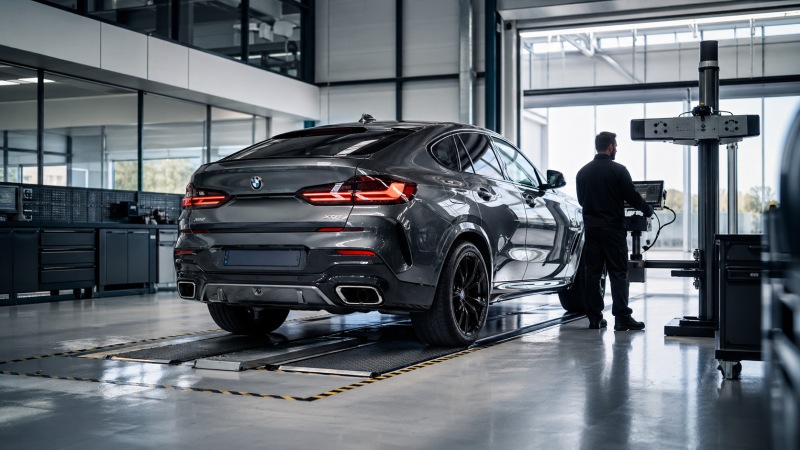
A BMW at the Hauptuntersuchung
Diesel still wins for many drivers — and that is legal
The numbers explain why Germans have not abandoned diesel the way headlines suggest.
Petrol energy tax: 65.45 cents per litre. Diesel: 47.04 cents. That 18.4-cent-per-litre gap has held since 2003, per § 2 of the
Energiesteuergesetz. Diesel buyers pay higher Kfz-Steuer — €9.50 per 100 cm³ of displacement versus €2.00 for petrol — but anyone driving more than about 18,000 km a year still comes out ahead. A 320d runs roughly €286 a year in Kfz-Steuer against the 320i's €156 to €160; the fuel savings recover that gap quickly at autobahn mileage.
The diesel-ban story is also overblown. As of April 2026, only Stuttgart, Darmstadt, and Munich keep active
Diesel-Fahrverbote, and only for older Euro classes. Hamburg lifted its ban in September 2023; Berlin in 2021–2022. Any Euro 6d or 6e diesel — meaning BMWs first registered from January 2021 onward — drives anywhere a green Plakette is honored, which is every German Umweltzone. Diesel's share of new registrations dropped from 17.2% in 2024 to about 12.8% in March 2026, per KBA, but the installed base is still enormous and the running-cost math has not flipped.
The "ship it home" math just got worse
If you are tempted by the buy-in-Germany, drive-Autobahn, ship-to-the-US plan, run the numbers again with the April 2025 update.
A BMW under 25 years old has to meet FMVSS — federal motor vehicle safety standards — and EPA emissions in US-spec form. The German BMW comes with ECE-spec headlamps, which are not legal on US public roads under 49 CFR 571.108. Side markers, turn-signal colors, FMVSS 581 bumper height, OBD calibration — all different. A federalized import is a five-figure proposition before you book the freight.
Then there is Section 232. Since April 2025, EU-origin vehicles under 25 years old face a 25% tariff on top of the 2.5% base duty — roughly 27.5% combined at the port. A €60,000 BMW becomes a problem well north of $80,000 before customs broker fees, federalization, and registration in your home state.
The exception is the 25-year rule. Vehicles built April 2001 or earlier — as of this writing — are exempt from FMVSS and EPA, and pay only the 2.5% base duty under HTS 9903.94.04. That is why prices on classic models like the E39 5 Series, E46 3 Series, and early E53 X5 in Germany have stiffened over the last 18 months. American collectors did the math and showed up at the same auctions Germans have been quietly attending for a decade.
Two myths to drop before you arrive
The roundel is not a propeller. BMW Group Classic's Fred Jakobs has clarified this on the record, BMW's own corporate site repeats it, and the New York Times covered the correction back in 2010. The blue and white quarters are the Bavarian state colors in inverted arrangement — a deliberate inversion because German trademark law at the time forbade incorporating sovereign symbols. The propeller story comes from a 1929 BMW advertisement and a 1942 in-house article. Marketing, not history. Fun marketing, but marketing.
The other one: M+S tires no longer satisfy German
Winterreifenpflicht. Since 1 October 2024, only the Alpine snowflake symbol — the 3PMSF mark — qualifies. Drive on bald summer rubber when Glatteis or Schneematsch hits the road, and the Bußgeldkatalog 2026 lists €60 plus one Punkt in Flensburg. With an obstruction it is €80; with an accident, €120. The Halter who lets the trip happen catches €75 plus a Punkt of his own. Cheap mistake to avoid.
What to actually take away
If you buy a BMW in Germany, you are buying a different car under different rules than the one you knew at home — and the differences cost real money in either direction. The smart play is to map them before you walk into a dealership.
-
Confirm the diesel option you actually want is still on the configurator.
-
Check the manual transmission window — it is closing fast.
-
Factor Kfz-Steuer and the HU schedule into year-one ownership cost, not just the sticker price.
-
Forget the Section 232 import path unless you are chasing a 25-year-eligible classic.
-
Bring a German bank account and an eID before you book the Zulassungsstelle Termin.
Reference databases like Automobilisto exist for exactly this — verified specifications, original brochures, and German-market data cross-referenced against KBA records and homologation filings. Use one before you decide. The dealer will not volunteer half of this.
Wichtige Inhalte und Schlagwörter - Keywords (hashtags #):
#kfztechde, Auto, kfz, kfztechnik, fahrzeuge,
kfzmechatroniker, automobil, BMW, buy a bmw, bmw germany, bmw tüv, bmw
shopping, German automotive market,
|
|